ANDREW'S ARREST: ROYAL LINE OF SUCCESSION CHALLENGED
Andrew Mountbatten-Windsor's arrest on misconduct allegations heightens royal succession debates.
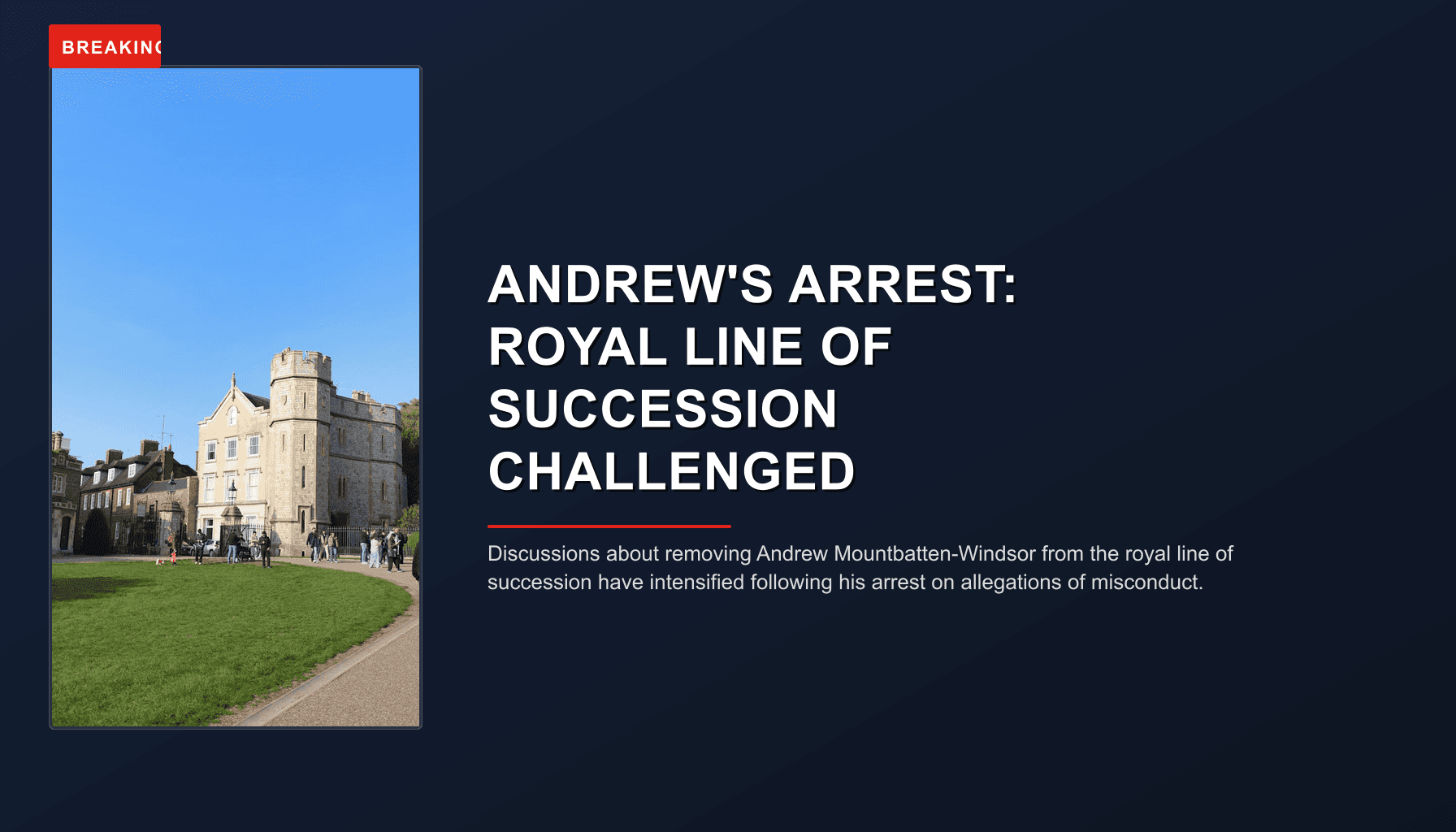
The arrest of Andrew Mountbatten-Windsor reignites debates on royal succession and accountability.
Andrew Mountbatten-Windsor was arrested by Thames Valley Police on February 19, 2026, under suspicion of misconduct in public office, a situation that has magnified scrutiny over his position in the royal line of succession. His arrest has prompted calls to officially remove him from the line, despite the challenges involved.
The arrest has reignited discussions on his controversial ties with Jeffrey Epstein, a connection that has long plagued the former prince and the royal family itself. UK lawmakers are now demanding an independent investigation into these ties and the extent of knowledge held by the royal family. The need for transparency within the monarchy has become a heightened point of concern.
Andrew, who has already relinquished his royal titles, remains the eighth in line to the throne as of February 23, 2026. This persistence in the royal line, despite his arrest, is fuelling debates within Parliament and amongst the public. Several MPs, including members from the Liberal Democrats, are vocalising their intentions to see this rectified.
Support for his removal extends beyond the UK. Australian Prime Minister Anthony Albanese has openly backed this course of action, marking an international dimension to the implications of Andrew's current legal troubles. This international support could pressure UK leadership to reassess the line of succession.
The legal situation is fraught with complexity, involving sub judice risks and unverified allegations about the specifics of Andrew's misconduct. While full details remain undisclosed, the arrest itself against such a high-profile figure underscores the serious nature of the allegations.
This affair raises broader questions about accountability and reform within the British monarchy. The public's call for transparency grows louder, urging the royal family to address not only Andrew’s situation but also to consider implementing modern checks and balances.
Observers note that this isn’t the first time royal connections with controversial figures have cast shadows over the palace. Historical precedents of royal scandals have always tested the resilience and the response mechanisms of the monarchy.
As proceedings unfold, the UK government faces criticism for what some perceive as inaction. There remains an expectation from the public and political circles alike that strong measures be taken to preserve the integrity of the monarchy.
Related Articles
 Drew P. Facts
Comments (0)
No comments yet. Be the first to share your thoughts!
Leave a Comment
Your email address will not be published. Comments are moderated before appearing.