News
Latest:
LATEST UK & WORLD NEWS HEADLINES »»» LATEST UK & WORLD NEWS HEADLINES »»»
LATEST UK & WORLD NEWS HEADLINES »»» LATEST UK & WORLD NEWS HEADLINES »»»
Asia's stock markets face a third day of decline as oil prices rise amid concerns over Iran tensions, reflecting broader economic uncertainties.
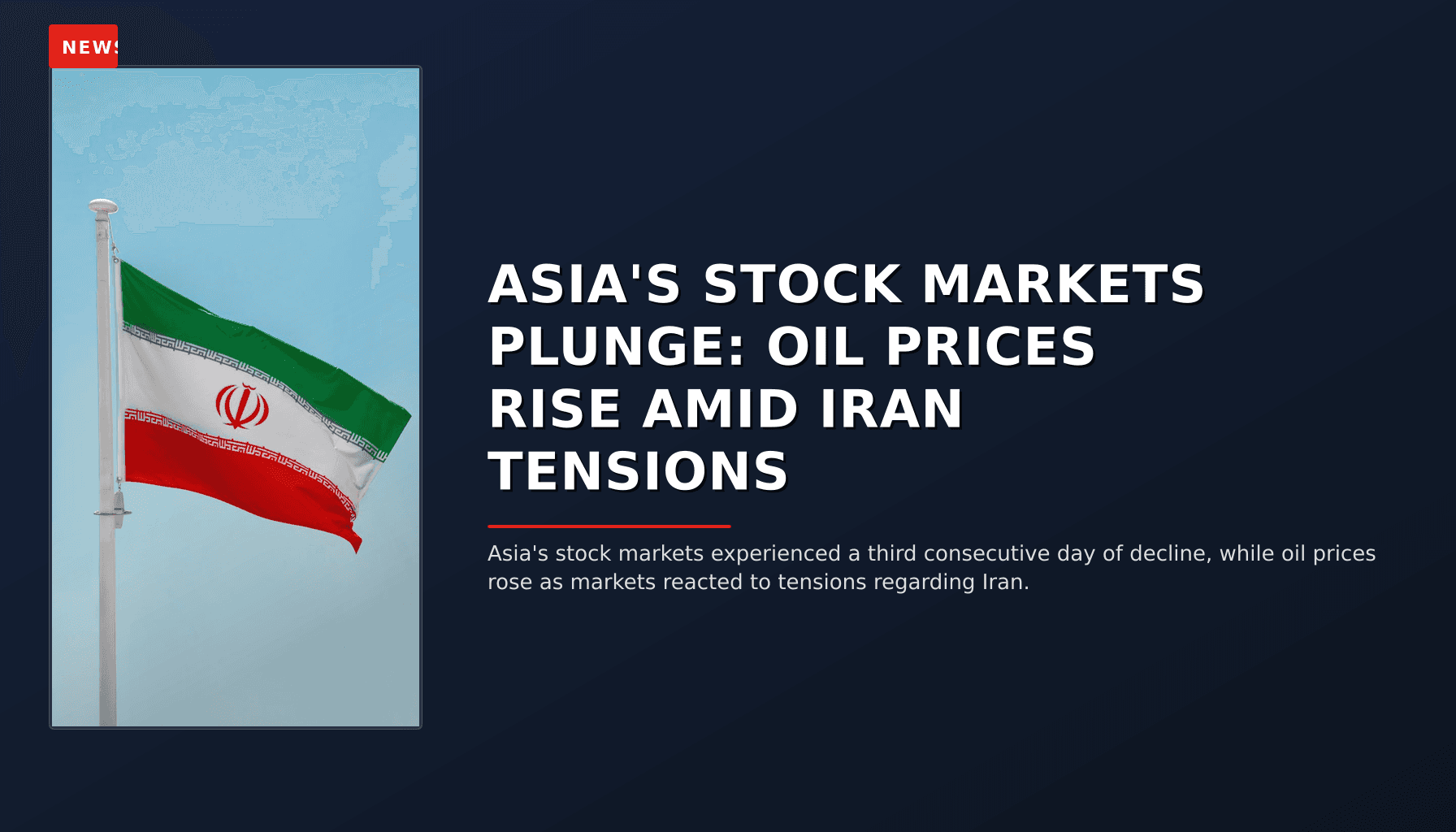
Stock markets across Asia have experienced a third consecutive day of decline, reflecting broader global economic uncertainties. Bloomberg and Reuters reports highlight the ongoing volatility, with key indices in countries such as Japan and South Korea bearing significant losses. This sustained downturn comes despite efforts by central banks to stabilize financial markets through various monetary policies.
The rise in oil prices has further complicated the economic landscape. According to data from Oilprice.com and the U.S. Energy Information Administration (EIA), Brent crude futures have increased by over 3% this week, driven by heightened tensions in the Middle East. The situation with Iran remains a critical factor, as geopolitical tensions often send shockwaves through energy markets.
Markets are closely monitoring developments in the region, particularly after recent escalations in diplomatic rhetoric between Iran and Western nations. Analysts suggest that while oil prices typically rise during periods of instability, the extent to which this increase is directly linked to current tensions remains unclear. This uncertainty adds another layer of complexity for investors already navigating a challenging economic environment.
The decline in Asian stock markets can be attributed to a combination of factors, including weaker-than-expected corporate earnings and broader global market trends. However, the rise in oil prices has also contributed to inflationary pressures, which may further impact consumer spending and business investments in the coming months.
Investors are now looking towards key economic indicators for signs of recovery or further decline. Central banks worldwide will be closely monitoring these developments, with potential implications for future monetary policy decisions. The situation underscores the delicate balance between global economic stability and geopolitical tensions.
As tensions in the Middle East continue to evolve, market participants remain on high alert. Experts warn that any escalation could have far-reaching consequences, not just for energy prices but also for global financial markets. For now, Asia's stock markets appear poised to remain volatile, with oil prices acting as a key indicator of broader economic sentiment.
The ongoing situation serves as a reminder of how interconnected global markets are, with even localized conflicts having significant ripple effects worldwide. As the world watches, the interplay between economic and geopolitical factors will continue to shape market dynamics in the days and weeks ahead.
 Bea Rightback
No comments yet. Be the first to share your thoughts!
Your email address will not be published. Comments are moderated before appearing.
4 March 2026 at 04:452 min read
Read More