BORIS JOHNSON'S CALL: NON-COMBAT TROOPS IN UKRAINE AHEAD OF CEASEFIRE
Former UK Prime Minister Boris Johnson calls for non-combat troop deployment in Ukraine, proposing a potential shift in defence policy amidst ongoing Russia-Ukraine tensions.
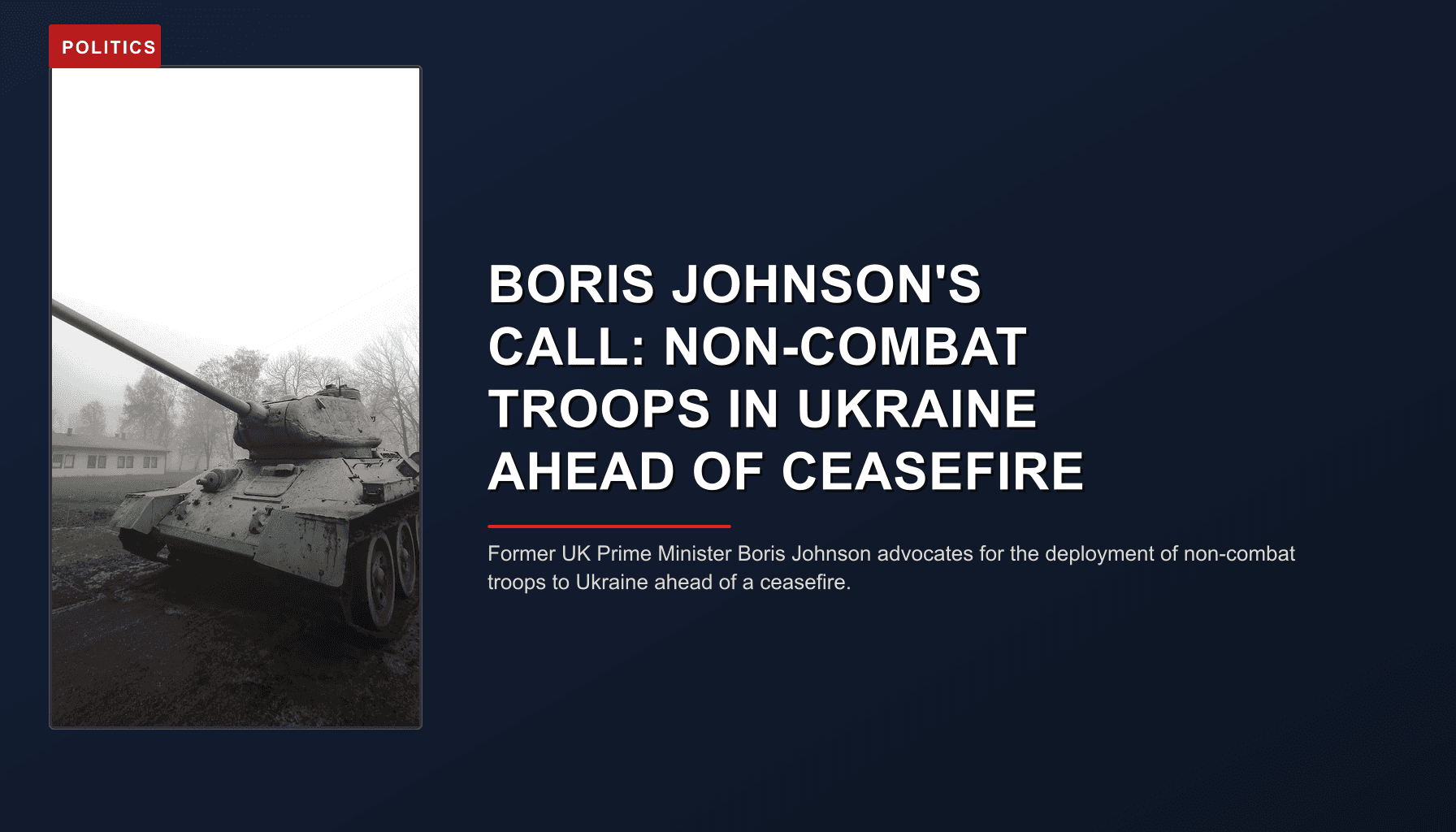
Boris Johnson urges for non-combat troop deployment in Ukraine, signalling a shift in UK policy.
In a bold move that has captured international attention, former UK Prime Minister Boris Johnson has called for the immediate deployment of non-combat troops to Ukraine. Johnson's proposal comes amid ongoing tensions, with a ceasefire yet to be formally achieved.
Johnson suggested that deploying non-combat troops to Ukraine’s peaceful areas could serve as a powerful signal of unwavering support against Russian aggression. This recommendation, if adopted, would mark a notable departure from the current UK policy, which favours troop deployment only after a formal ceasefire is established.
The implications of Johnson’s proposal are significant, as it suggests a shift from the established stance of the UK Ministry of Defense. The ministry has reaffirmed its commitment to participation in a multinational force, but only following the cessation of hostilities, highlighting a divergence in approaches.
Johnson argues that an early deployment would reinforce the international community's resolve and provide a morale boost to Ukraine. He believes it would demonstrate solidarity and deter further aggression, a sentiment that echoes previous diplomatic efforts but introduces a proactive military dimension.
This suggestion has not been without controversy, as some critics argue that such a move could escalate tensions. There are concerns about the prospect of non-combat troops becoming embroiled in unforeseen conflicts, which could complicate the fragile negotiations already underway.
Labour leader Keir Starmer has expressed caution, urging that diplomatic pathways continue to be exhausted. Starmer's position suggests a more reserved approach that prioritises direct communication channels with Russia and continued negotiations, a stance that many feel remains crucial at this juncture.
Prominent European leaders, including French President Emmanuel Macron, have not publicly embraced Johnson's proposal, focusing instead on orchestrated diplomatic solutions. Macron has reiterated the importance of unity among allies in pursuing a collective post-ceasefire strategy.
As the UK government navigates these turbulent waters, the proposal has sparked debate on the role of military forces in peacekeeping versus active engagement. It draws on historical precedents, such as NATO's peacekeeping missions, to argue for proactive involvement.
The international community is watching closely as Ukraine continues delicate negotiations with Russia, with reports indicating some progress in talks over the contentious Donbas region. Yet, the spectre of aggression looms large, and Ukraine's allies remain vigilant.
Related Articles
 Whip Whitaker
Comments (0)
No comments yet. Be the first to share your thoughts!
Leave a Comment
Your email address will not be published. Comments are moderated before appearing.