
ENERGY CRISIS: UK FOOD PRODUCERS FACE SHARP COST INCREASES
UK food producers face a substantial increase in energy costs, prompting fears of rising food prices and business closures.
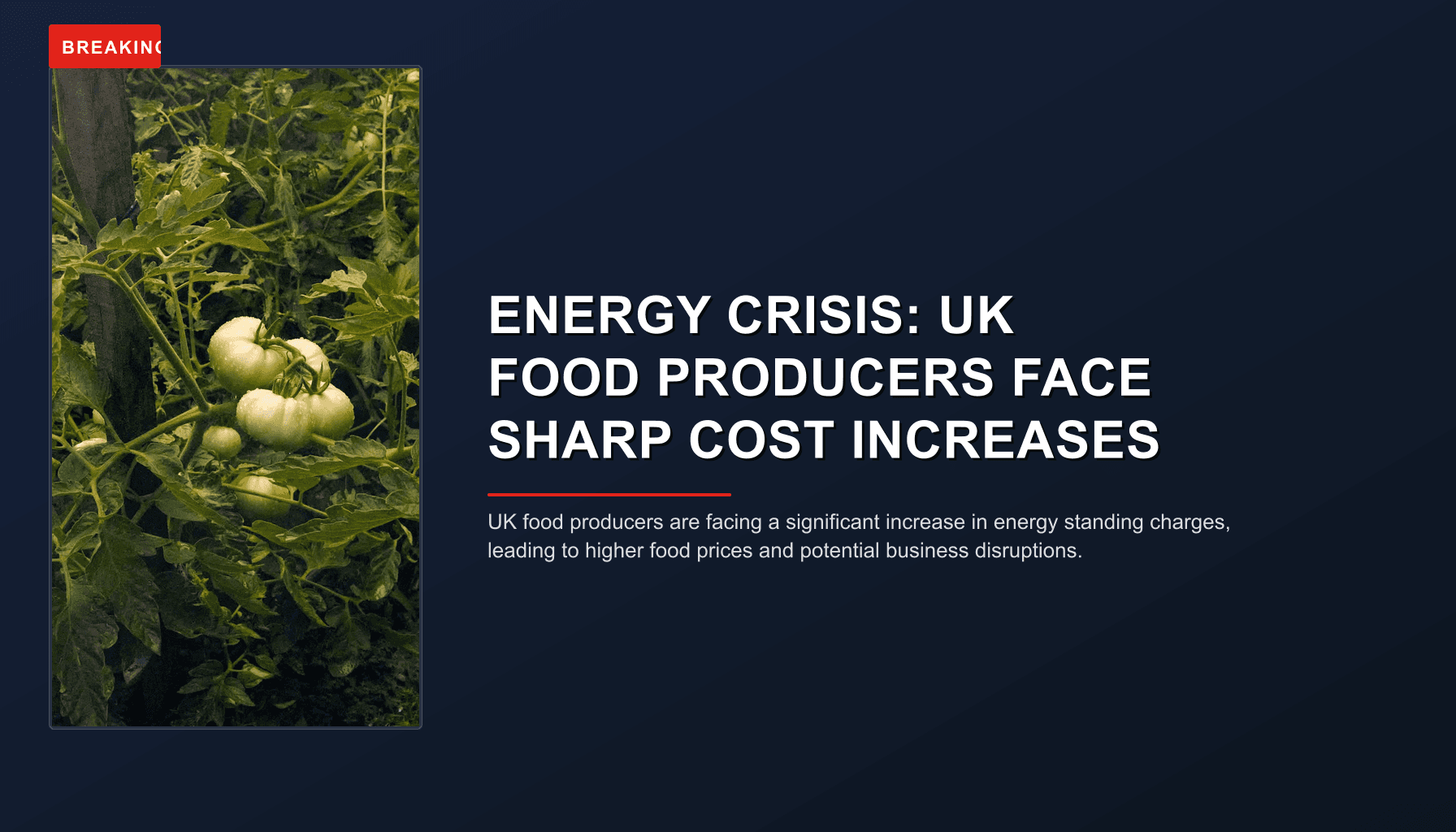
UK food producers are grappling with a surge in energy costs threatening their businesses.
In a dramatic escalation of the UK's energy cost crisis, food producers across the nation are bracing for significant financial strain as energy standing charges are set to rise by up to 94% by April 2026. This looming increase could wreak havoc on a sector already grappling with elevated electricity prices, which remain stubbornly 70% above pre-Ukraine invasion levels.
Industry experts are sounding alarms over the potential fallout. Large-scale glasshouse businesses, integral to the UK's agricultural output, may see their annual energy expenses swell by as much as £1 million. The British Tomato Growers' Association, representing a crucial segment of this industry, warns that without timely government intervention, the repercussions could extend beyond individual businesses to impact national food security and pricing.
A significant factor worsening the situation is the lack of inclusion of the horticulture sector in the Energy Intensive Industries exemption scheme. This oversight means many agricultural businesses are left without crucial financial relief, putting them at a further disadvantage compared to their European counterparts who receive such benefits, according to data emerging from sources closely monitoring these developments.
The current energy conundrum takes root in global geopolitical tensions, particularly the conflict in Ukraine, which has dramatically altered the European energy market. Since the invasion, supply disruptions have driven costs upward, and despite some stabilisation, the market remains volatile and precarious, a reality compounded by the impending hike in standing charges.
Wider concerns are echoed by the Confederation of British Industry and Energy UK, both of which have expressed reservations about the UK's future as a manufacturing powerhouse. These organisations highlight that 40% of firms have already reduced their investment plans due to soaring electricity prices, indicating broader economic implications if the situation persists unaddressed.
Tensions within the agricultural sector are palpable. Simon Conway, a prominent figure associated with the Cucumber and Pepper Growers' Association, articulates a growing unease. 'Without urgent measures, we risk losing not only profitability but viability,' Conway stated, painting a grim picture of the potential for production halts and increased consumer prices.
Critics argue that government silence thus far suggests a lack of urgency in addressing the root causes of these energy woes. Calls for targeted interventions, such as expanding relief schemes, have been made by major trade associations yet remain unanswered. Observers worry this inaction could force smaller producers out of the market entirely.
Related Articles


 Drew P. Facts
Comments (0)
No comments yet. Be the first to share your thoughts!
Leave a Comment
Your email address will not be published. Comments are moderated before appearing.