
🔴 Facing Justice in Romania: What the Odds Look Like
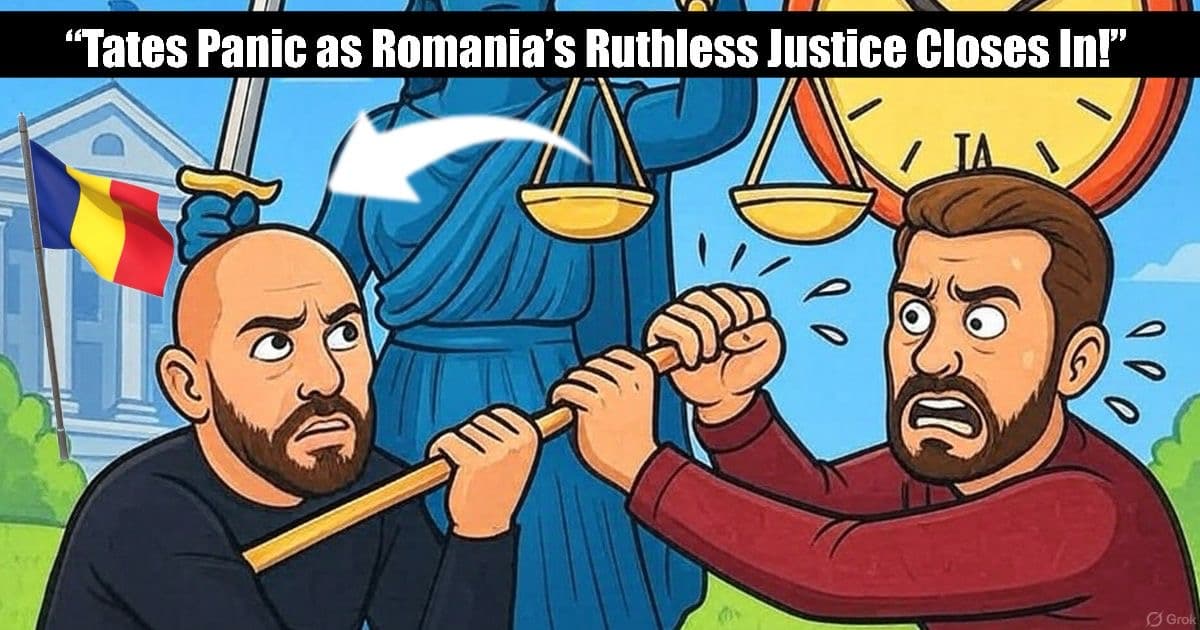
Trial by judges, not jury. Long case files. High conviction rates. Why Romania’s legal system gives defendants like the Tates little room to manoeuvre. Following on from our previous article, we have had many people contact us with questions about how the Romanian legal system operates.
Indeed, there are many differences — differences which, to British observers, may seem as strange or wilfully perverse as driving on the right side — the wrong side — of the road. But on closer inspection, they hold up embarrassingly well.
They have practical and administrative consequences — trials can last months instead of weeks — but more than that, they reflect a whole different way of doing justice.
One of the main differences is the jury.
There isn’t one.
You won’t be judged by a dentist’s assistant, a retired PE teacher, and a kitchen fitter. In Romania, serious criminal cases are tried by a panel of professional judges — usually two trial judges, with a senior presiding judge overseeing the process. These are full-time legal professionals, not members of the public temporarily drafted into civic duty. Their job is not to feel anything — it’s to apply the law and follow the evidence.
This single structural point shapes everything else.
Without a jury to protect or persuade, Romanian prosecutors don’t spend their time appealing to moral instincts or broader senses of fairness. Their job isn’t to convince the court that a guilty verdict would feel right. It’s to convince the court that, as a matter of law, a guilty verdict is what the evidence demands.
The presumption is that everyone present already knows the law — and is bound to follow it. Prosecutors don’t turn up to try their luck. They arrive with a case file that has often taken years to build: surveillance footage, phone records, financial trails, co-operating witness statements, intercepted messages, and expert reports. It’s not courtroom theatre. It’s paperwork.
One of the consequences is that prosecutors are not there to plead with you that a guilty verdict would be justice, drawing on legal arguments and the case file of evidence to persuade you.
No — everybody here knows, and is duty bound to follow, the law. Prosecutors do their homework and come prepared: they don’t turn up unless they have compiled a fully evidenced, watertight case file saying you’re guilty. Defence lawyers are often reduced to trying to say that the homework hasn’t been done properly — something that trained professional judges will decide.
Related Articles

Comments (0)
No comments yet. Be the first to share your thoughts!
Leave a Comment
Your email address will not be published. Comments are moderated before appearing.