
Hospital Orders: a mental health 'get out of jail free card' for serious offenders?
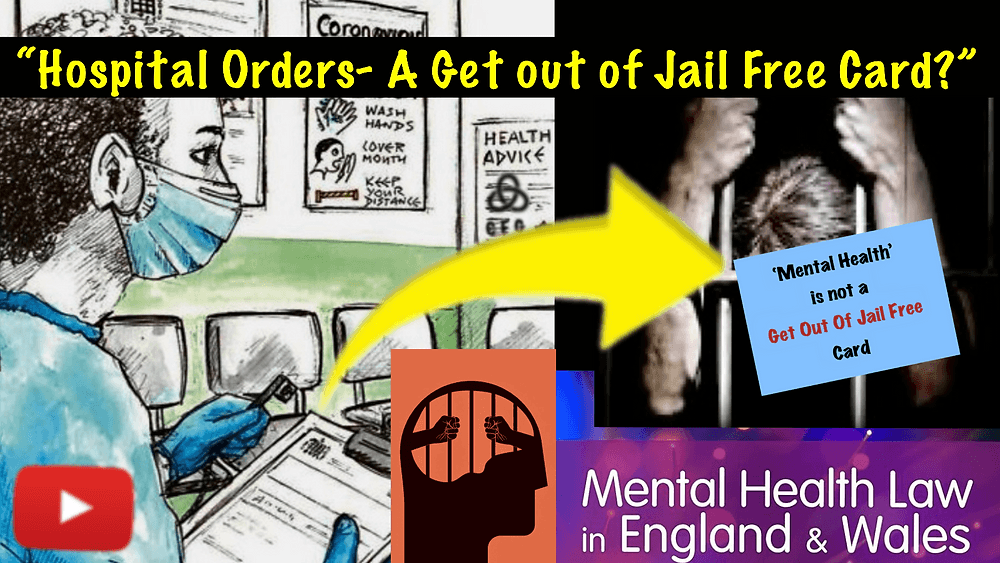
When violent crimes are committed by individuals with severe mental health conditions, the justice system faces the challenge of balancing punishment, public safety, and medical treatment. Some cases—such as that of Valdo Calocane, sentenced to a secure mental health facility for the shocking killings of three strangers in Nottingham—have sparked outrage, with victims’ families questioning whether justice has truly been served. The use of hospital orders in such cases has led to accusations that the system allows dangerous offenders to avoid proper punishment.
Yet, as the case of Joshua Jacques shows, the reality is more complex. Jacques, who suffered from severe mental illness, was given a life sentence with a minimum term of 46 years for a triple murder, despite clear evidence that he was in a psychotic state at the time. His sentencing proves that mental illness does not always shield offenders from lengthy prison terms. So, does the system truly favour those with psychiatric conditions, or is there a more nuanced approach at play? And are hospital orders really the ‘light’ sentence some critics claim them to be?
How Hospital Orders Work
A section 37 hospital order or section 37/41 restricted hospital order allows a court to sentence an offender to a secure mental health facility instead of prison, based on psychiatric assessments. This decision takes into account both the severity of the crime and the individual’s mental state.
One key factor is practicality. A severely unwell individual may pose a risk to themselves and others, including prison staff and inmates. A secure hospital provides a structured environment where treatment can be closely monitored, ensuring the individual remains stable and compliant with necessary care. These units are comparable to a Category B prison in terms of security, though they differ in their focus on treatment rather than punishment.
Punishment, Accountability, and Public Safety
A core principle of the justice system is that punishment must be proportionate to the crime. If a murderer receives a life sentence with a 20-year minimum term, they must serve that time, regardless of whether they show remorse or rehabilitation. In contrast, hospital orders prioritise treatment, meaning a person could, in theory, be released once they are deemed stable.
However, the reality is more complicated. A judge—not just doctors—has the final say on whether a person can be released from a restricted hospital order. This is not automatic, even if the individual is declared mentally stable. Judges consider public safety, remorse, and ongoing risk. Someone who refuses to acknowledge the harm they caused may remain detained indefinitely.
Related Articles


Comments (0)
No comments yet. Be the first to share your thoughts!
Leave a Comment
Your email address will not be published. Comments are moderated before appearing.