
LIB DEM REFORMS: CURBING INVESTOR PROFITS IN SEND SECTOR
The Liberal Democrats propose reforming the SEND sector, tagging it as critical infrastructure to curb investor profiteering.
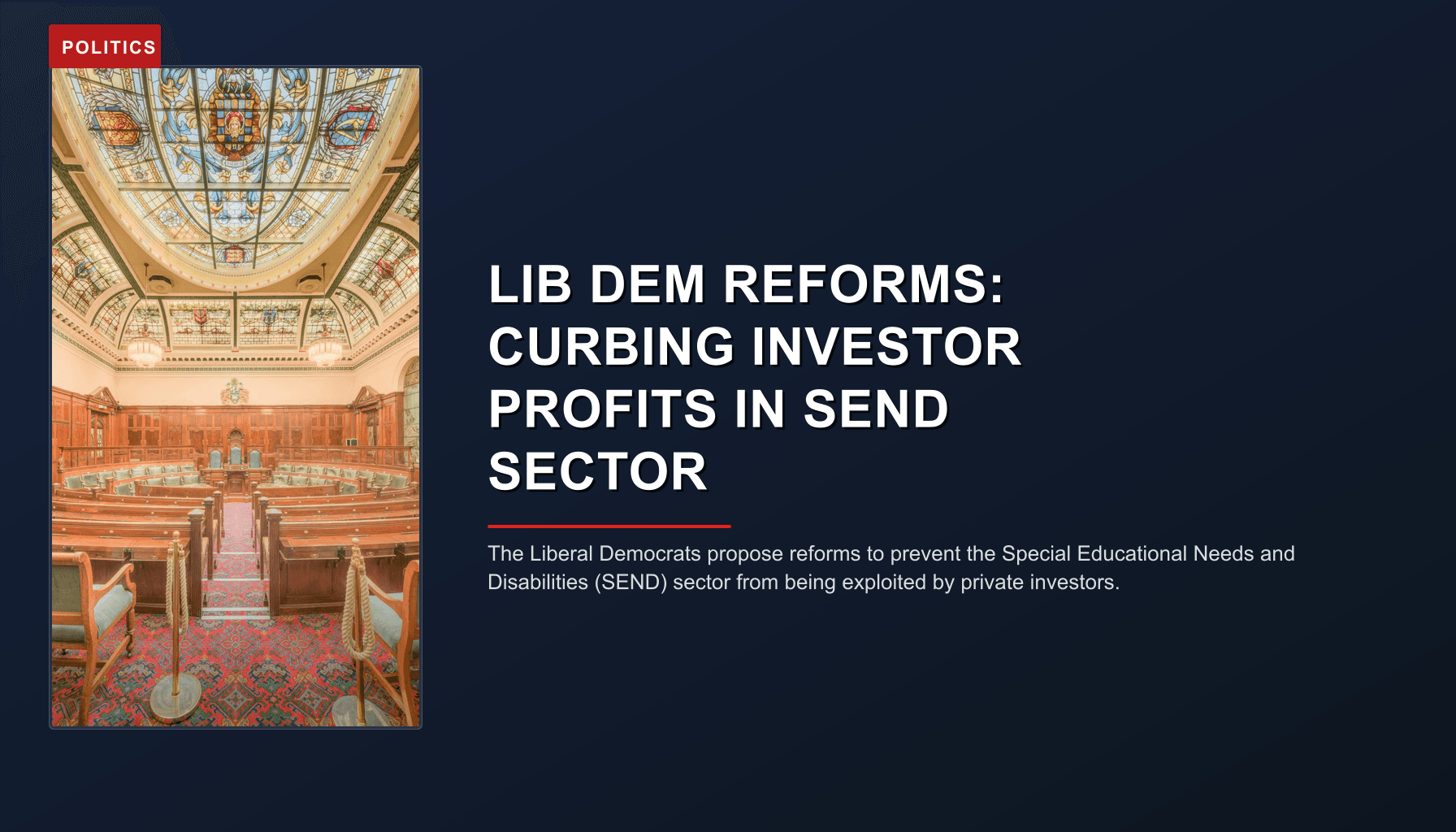
The Liberal Democrats aim to shield the SEND sector from private equity exploitation.
The Liberal Democrats have announced ambitious reforms to safeguard the Special Educational Needs and Disabilities (SEND) sector from exploitation by private investors, proposing to designate it as critical national infrastructure. This significant policy move was revealed in a statement led by party leader Ed Davey.
For years, private equity firms have reaped substantial profits from the SEND sector, with top companies reportedly generating annual profits exceeding £100 million. This lucrative environment, critics argue, prioritises financial gains over educational needs, an issue the Lib Dems aim to address through stringent policy measures.
Central to the proposed reforms is the implementation of public interest tests under the Enterprise Act, designed to curb what is seen as excessive profiteering by private equity stakeholders. As Davey emphasised, these tests would ensure that educational services focus on providing quality support rather than satisfying private shareholders.
Council spending on high-needs education has skyrocketed, with expenditures projected to rise by 66% between 2016 and 2025, reaching a staggering £12 billion. Among the councils, Surrey County Council recently approved an additional £4.9 million investment to bolster its SEND services, underscoring the growing financial demand in this sector.
The Lib Dem proposal arrives at a critical juncture, as concerns mount over the prioritisation of investor interests in a sector that fundamentally serves vulnerable children. By seeking national infrastructure classification, the party aims to shift focus back to the welfare and development of SEND pupils.
However, the effectiveness of a proposed cap on SEND provider profits remains a topic of debate. Some analysts point out that determining the cap's real impact on service quality and financial efficiency is crucial before implementation.
The SEND sector has long navigated the delicate balance between private investment and public service. The potential reclassification and subsequent reforms proposed by the Lib Dems could set legislative precedence, forcing private entities to remodel their operations in alignment with national interests.
While the party's reforms are met with support from advocates of educational equity, sceptics are keenly observing the implementation process, with particular interest in how existing enterprise laws will adapt to accommodate such significant sectoral changes.
Related Articles

 Whip Whitaker
Comments (0)
No comments yet. Be the first to share your thoughts!
Leave a Comment
Your email address will not be published. Comments are moderated before appearing.