In a fiery clash of rights, a Koran-burning protest sparks a legal battle, with free speech triumphing at Southwark Crown Court, igniting fierce debate over expression limits.
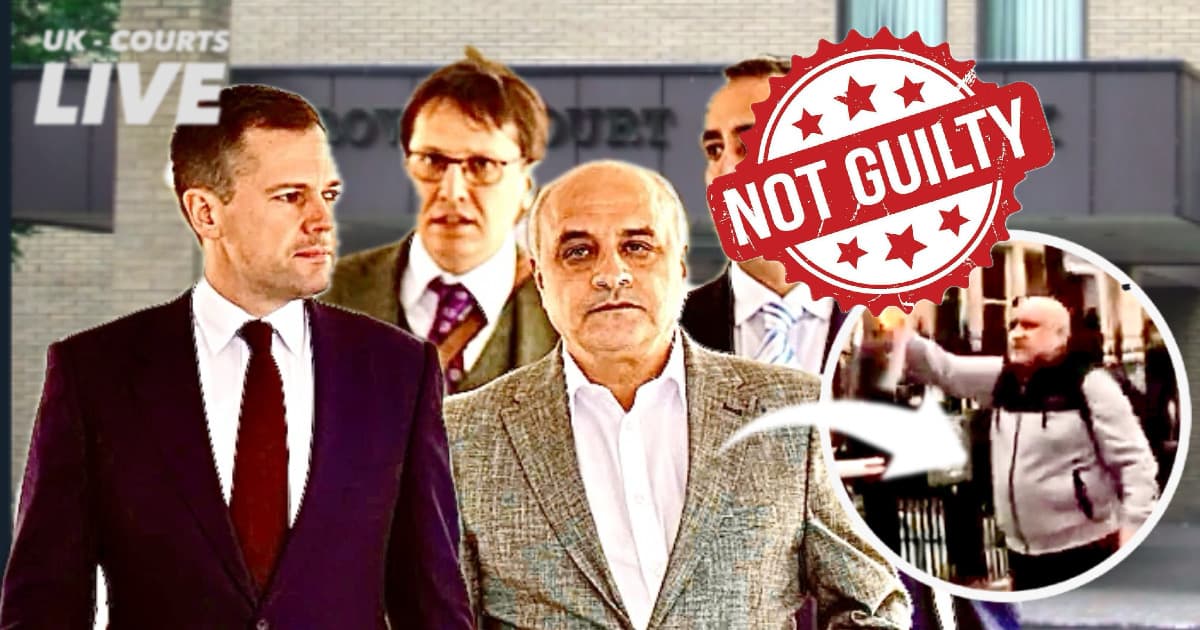
In a landmark ruling at Southwark Crown Court, a man convicted of a religiously aggravated public order offence for burning a Koran outside the Turkish consulate in London has had his conviction overturned, marking a significant moment for free speech debates in the UK.
Hamit Coskun, 51, originally found guilty in June for his actions on 13 February 2025, saw his appeal succeed after a meticulous judicial review led by Mr Justice Bennathan, who concluded the prosecution failed to prove Coskun’s conduct was disorderly or likely to cause harassment, alarm, or distress to onlookers.
Coskun’s actions, which included shouting inflammatory phrases such as “f*** Islam”, “Islam is a religion of terrorism”, and “Koran is burning” while setting the religious text alight, sparked intense legal scrutiny.
The incident, staged outside the Turkish consulate, was described by Coskun’s legal team as a deliberate protest against what he called the “Islamist government” of Turkish President Recep Tayyip Erdogan.
Social media posts by Coskun, presented in court, revealed his intent to challenge what he described as Turkey’s role as a “base for radical Islamists” and Erdogan’s alleged pursuit of a “Sharia regime”. These posts formed a critical part of the prosecution’s case, which argued that Coskun’s actions were driven by hostility towards followers of Islam.
Tim Owen KC, representing Coskun, argued before the court that his client’s conduct was a lawful exercise of **free expression** under Article 10 of the European Convention on Human Rights. Owen emphasised that Coskun’s protest targeted the institution of Islam and its holy book, not individual Muslims.
Owen told the court, framing the act as a provocative but legitimate expression of Coskun’s views on Islam’s institutional framework. This argument proved pivotal in the appeal, with Mr Justice Bennathan ruling that the prosecution had not demonstrated that Coskun’s behaviour met the threshold for a public order offence.
No comments yet. Be the first to share your thoughts!
Leave a Comment
Your email address will not be published. Comments are moderated before appearing.
Default
Share this article
The prosecution, led by Philip McGhee, countered that Coskun’s actions were inherently inflammatory, citing social media posts where he described the Koran as a “book that orders terror, permits plunder, rape, paedophilia” and called Islam a “terrorist ideology”.
McGhee argued that Coskun’s conduct was “motivated, at least in part, by hostility towards followers of Islam” and was likely to provoke distress among passers-by, particularly those concerned with preserving religious tolerance.
The prosecution pointed to an incident during the protest where Coskun was attacked by Moussa Kadri, a 59-year-old man who emerged from a nearby residential building, threatened to kill Coskun, and later slashed at him with a knife. Kadri, who told police he was defending his religion, was last month spared jail after pleading guilty to assault and possession of a bladed article in a public place.
McGhee submitted that Kadri’s reaction underscored the disorderly nature of Coskun’s protest, arguing that Coskun should have been aware of the potential for distress by the time Kadri intervened. The prosecution further highlighted statements Coskun made during his police interview, where he claimed:
These remarks, the prosecution argued, revealed a broader hostility towards Muslims, reinforcing their case that his actions breached public order laws.
Yet, Mr Justice Bennathan took a broader view, acknowledging the sensitivity of the issues at play. “People say stuff that is stupid, ignorant, offensive, upsetting – people say stuff that they shouldn’t say.
But to then go on to say that that’s a crime is an entirely different proposition,” he told the court. This reasoning underpinned the decision to quash Coskun’s conviction, which had initially resulted in a fine for a religiously aggravated public order offence.
The case drew significant attention from free speech advocates, with the National Secular Society (NSS) and the Free Speech Union (FSU) funding Coskun’s legal defence. The NSS, which has long campaigned against laws restricting expression, described the original conviction as an effective revival of blasphemy laws, abolished in England and Wales in 2008.
Stephen Evans, NSS chief executive, argued that Coskun’s conviction misused public order legislation to “punish offensive expression” in a manner that exceeded parliamentary intent
Evans stated, warning that allowing offence or threats of violence to dictate free speech boundaries risks granting extremists a veto over expression.
Coskun, a Turkey-born individual of half-Kurdish and half-Armenian descent, had initially been charged with intent to cause harassment, alarm, or distress against “the religious institution of Islam”.
Following objections from the NSS, the Crown Prosecution Service amended the charge, acknowledging the original wording was incorrectly applied. The appeal’s success has been hailed as a victory for free speech principles, with shadow justice secretary Robert Jenrick attending the hearing in support of Coskun.
Speaking outside Southwark Crown Court, Jenrick said, “I don’t agree with what Mr Coskun did, but I don’t believe it’s a crime. Parliament made a very important decision 20 years ago to abolish our blasphemy laws, and we can’t allow them to be re-created by the back door, inadvertently, by our court service.”
The ruling underscores ongoing tensions between public order laws and the right to free expression, raising questions about the threshold for criminalising provocative acts. Coskun’s case, with its complex interplay of legal, cultural, and political dimensions, is likely to fuel further debate over the boundaries of free speech in the UK.
Tommy Robinson Freed After Shock High Court Sentence U-Turn