NETFLIX MEGA DEAL: IMPACT ON ENTERTAINMENT LANDSCAPE
Netflix's $83 billion acquisition of Warner Bros. Discovery may reshape the entertainment landscape, pending regulatory approval amidst mixed industry reactions.
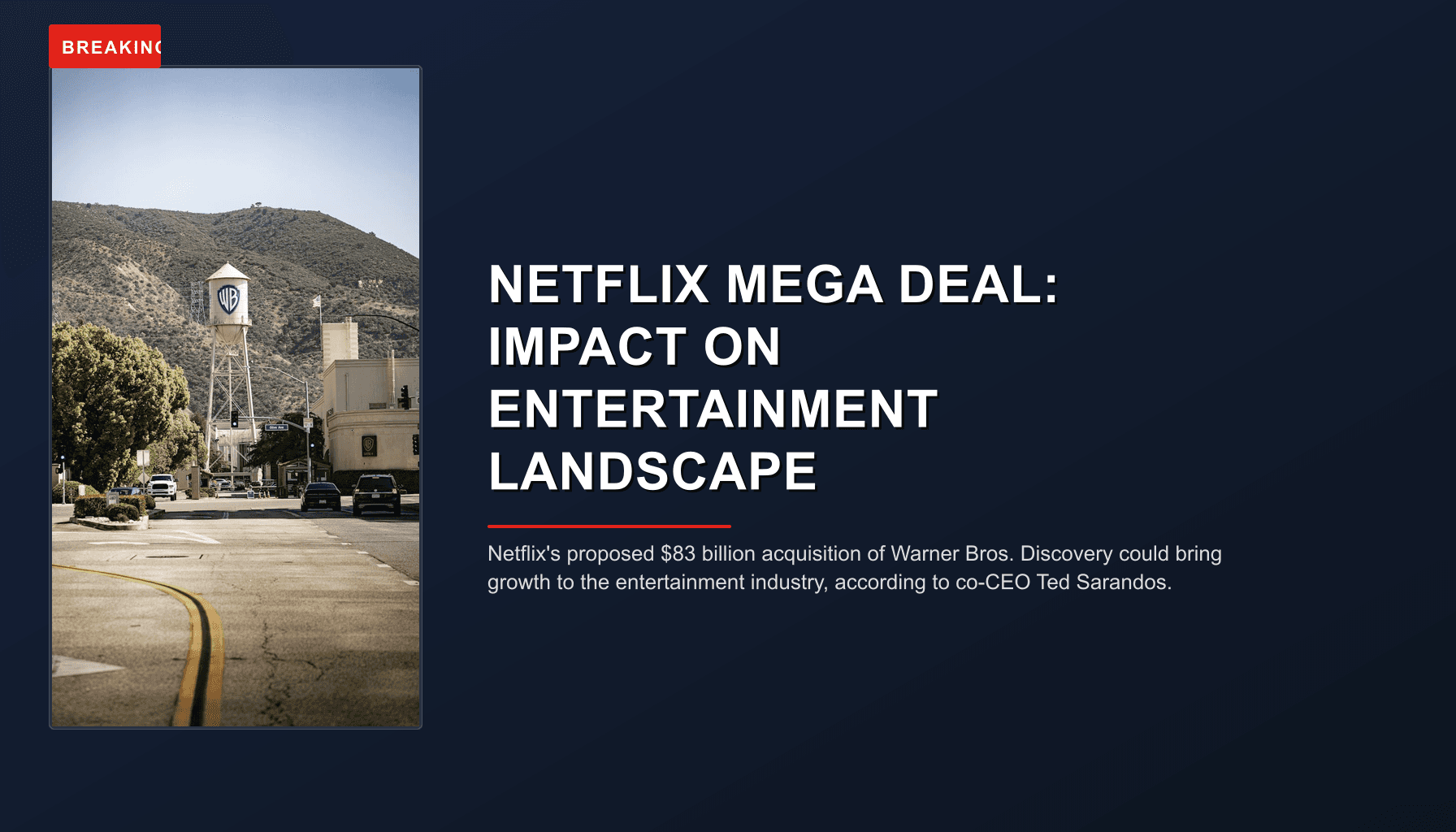
The proposed acquisition of Warner Bros. Discovery by Netflix marks a pivotal moment for media giants.
Netflix has announced plans to acquire Warner Bros. Discovery in a colossal deal valued at $83 billion, as unveiled this December by co-CEO Ted Sarandos. This strategic move, hailed by Sarandos as a boon for the entertainment sector, symbolises a seismic shift in media ownership.
The acquisition, subject to regulatory approval, includes the prestigious Warner Bros. film and television studios, as well as their streaming platforms HBO Max and HBO. Proponents argue it will create an unparalleled content library, merging Warner Bros.' storied cinematic legacy with Netflix's expansive reach.
Ted Sarandos asserts that this merger is poised to elevate global entertainment standards. Sources report his claim that combining the storytelling prowess of Warner Bros. with Netflix's innovative platform could redefine content delivery and audience engagement.
However, the proposal has sparked a spectrum of reactions from key industry figures. Celebrated director James Cameron has voiced significant concerns, describing the potential impact on the theatrical film sector as possibly catastrophic, a sentiment he has aired in prominent interviews.
While enthusiasm surrounds the prospects of this union, regulatory challenges loom. Approval from antitrust bodies is essential, given the immense market power such a merger would encapsulate. This scrutiny reflects broader apprehensions about market monopolisation and diminished competition.
Despite Cameron's critique, supporters argue that the deal aligns with modern viewing trends, where streaming services increasingly shape audience habits. Merging these giants could enhance viewer choice and access, fostering an ecosystem of richer, diverse content.
Public discourse reflects varied perspectives. Some industry experts focus on potential innovation spurts, while traditionalists fear a diminishing emphasis on cinema releases. This division highlights an ongoing debate about the future direction of media consumption.
In the political arena, Donald Trump has questioned the implications of such consolidation, although his views remain insufficiently substantiated according to confirmed reports. The complexity of the issue continues to fuel widespread debate.
The acquisition has stirred notable voices within the industry, including filmmaker Christopher Nolan, who expressed 'very significant' reservations. Nonetheless, these opinions are not universally held, as discussions unfold about the balance between streaming and traditional media.
Related Articles

 Bea Rightback
Comments (0)
No comments yet. Be the first to share your thoughts!
Leave a Comment
Your email address will not be published. Comments are moderated before appearing.