
NEW BILL INTRODUCED: ROAD TRAFFIC SAFETY FOCUS
The UK introduces the Road Traffic (Horse and Rider Safety) Bill, aiming to enhance equestrian safety. Details are emerging as the story develops.
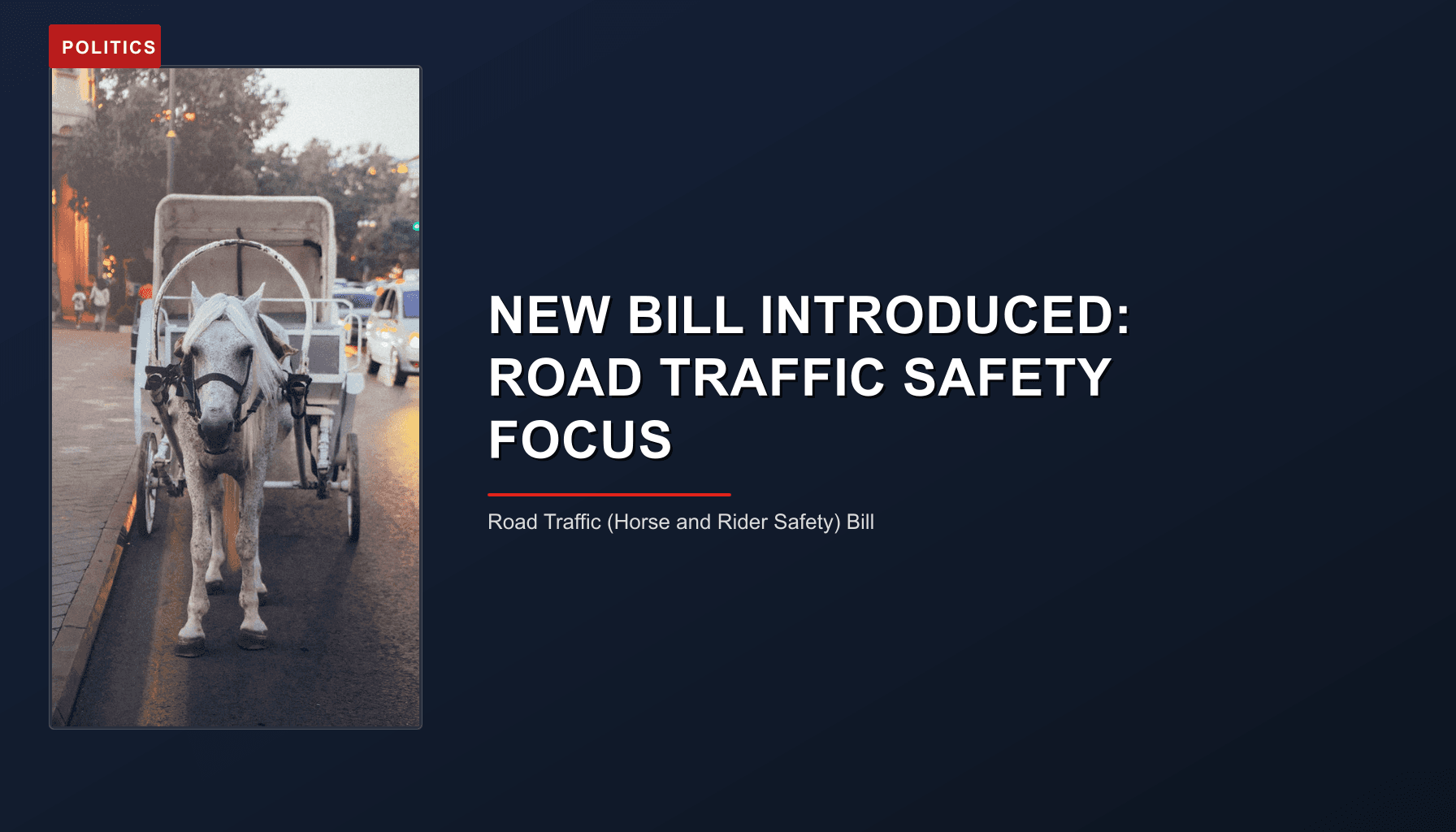
Legislation aims to improve safety measures for horse riders on UK roads amidst developing details.
In a significant legislative move, a new bill focusing on road traffic safety for horse riders has been introduced in the UK. Dubbed the Road Traffic (Horse and Rider Safety) Bill, it is set to address growing concerns regarding the safety of equestrians sharing the roads with motor vehicles. Full details of the bill have yet to be disclosed, and information is still being verified, marking its status as a developing story.
According to early reports, the bill seeks to enhance protective measures for horse riders, a group that has long advocated for heightened safety rules. Historically, the mix of slow-moving horses and faster traffic has presented ongoing challenges, prompting calls for intervention from road safety activists and riding organisations alike.
The introduction of this bill reflects an increasing awareness within governmental circles about the unique dangers faced by equestrians. While exact specifications of the proposed regulations remain unconfirmed, it is anticipated that the legislation will propose stricter penalties for drivers who fail to exercise care around horses.
This legislative effort comes amidst broader discussions about road safety and sustainable transport solutions. Equestrians, alongside cyclists and pedestrians, are key stakeholders in these discussions, given the heightened vulnerability they face on mixed-use roads. Organisations like the British Horse Society have long campaigned for such measures, illustrating the potential impact of the bill.
Public reaction to the introduction has been tentatively positive, though many are withholding judgment until the full scope of the bill becomes clearer. It is widely recognised that while legislative measures can assist, changing driver behaviour often requires sustained public education and awareness campaigns.
Equestrian advocates have pointed to successful models in other countries where specific lane markings and signage have markedly improved conditions. The UK government, it is presumed, may draw lessons from these international examples as it refines this bill.
As the bill progresses, it is worth noting that enforcement remains a key concern. Without robust mechanisms in place to ensure compliance, legislative intentions may fall short. This highlights a critical tension in road safety policymaking between regulation and real-world application.
The bill’s journey through the legislative process is expected to be closely monitored by stakeholders who view it as a potential game-changer for road safety. As more details emerge, so too will discussions about its feasibility and enforceability.
Related Articles

 Whip Whitaker
Comments (0)
No comments yet. Be the first to share your thoughts!
Leave a Comment
Your email address will not be published. Comments are moderated before appearing.