NOTTINGHAM INQUIRY UNFOLDS: CALL FOR TRUTH AND ACCOUNTABILITY
The Nottingham public inquiry begins, seeking answers and accountability for the tragic 2023 attacks. Led by Deborah Taylor, the inquiry addresses urgent questions about mental health and systemic failures.
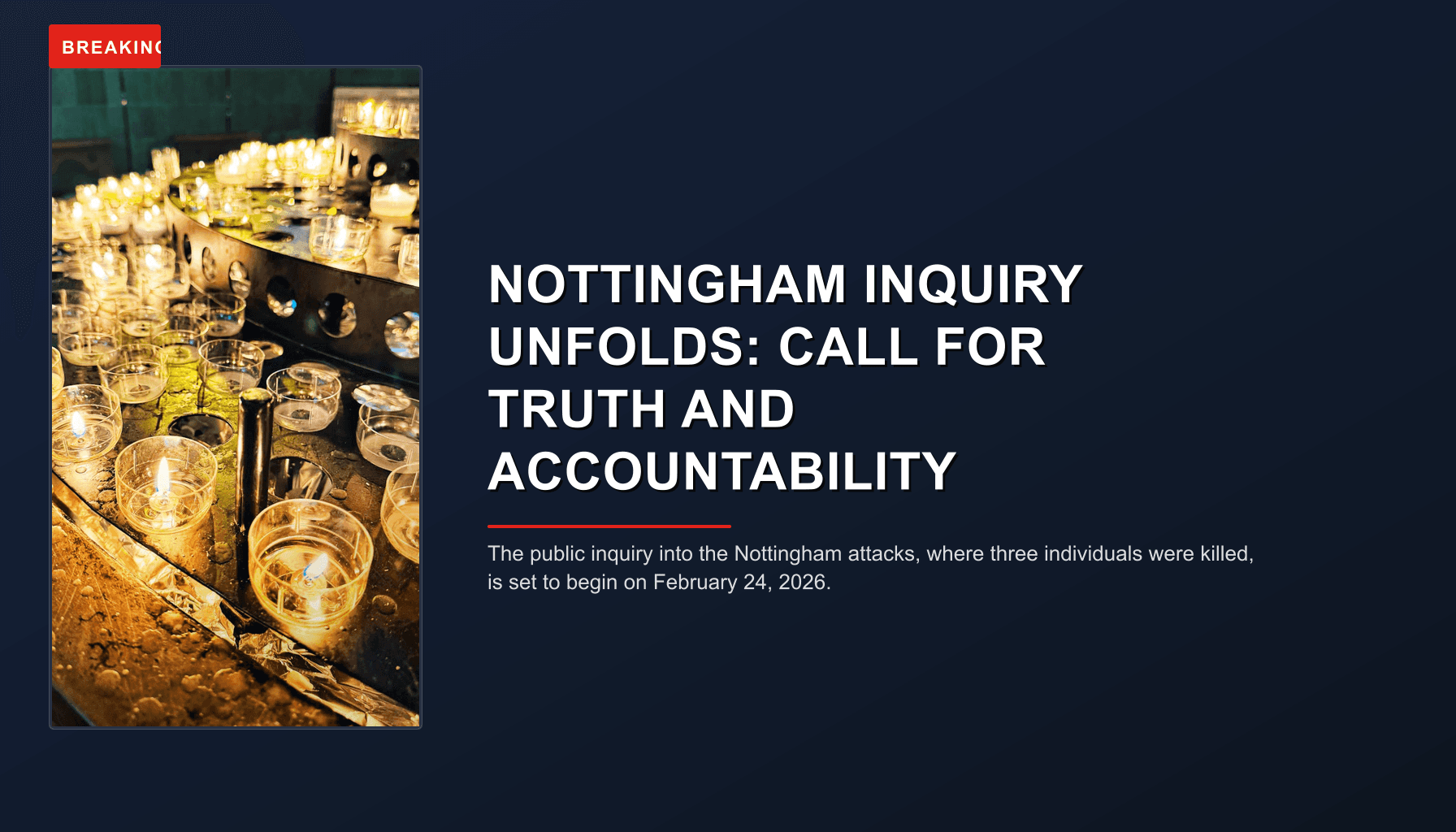
The public inquiry into the Nottingham attacks aims to uncover critical truths.
On February 24, 2026, the public inquiry into the shocking Nottingham attacks, where three lives were tragically lost in June 2023, is set to commence. Her Honour Deborah Taylor has been appointed to lead the proceedings, tasked with the formidable challenge of examining the circumstances leading up to and surrounding these harrowing events.
The inquiry comes in the wake of a violent spree in Nottingham that resulted in the deaths of Barnaby Webber, Grace O'Malley-Kumar, and Ian Coates. Valdo Calocane, later diagnosed with paranoid schizophrenia, admitted to manslaughter and was sentenced to an indefinite hospital order. This devastating incident has left a lingering impact on the community, fueling a demand for transparency and accountability.
Families of the victims have been vocal in their pursuit of the truth. According to reports from The Guardian, they are calling for a comprehensive examination of the facts, hoping the inquiry will reveal systemic shortcomings, if any, that contributed to this unimaginable loss.
As the inquiry unfolds, it will scrutinise various aspects including the role of local agencies in their response to the attacks. There remains significant ambiguity over potential institutional failures and their implications on public safety, a concern echoed widely among residents and officials alike.
Deborah Taylor, recognised for her juridical acumen, is expected to steer the inquiry with meticulous attention to detail. Her appointment has been confirmed by the UK Government, as the nation watches closely to see how the inquiry will address both known and yet-to-be-confirmed elements of the case.
The spotlight on Nottingham has intensified debates surrounding mental health and criminal responsibility. The complex interplay of these factors became starkly evident with Calocane's diagnosis, prompting broader questions about psychiatric evaluation and intervention in potential offenders.
Reportedly, public sentiment is underscored by a desire for justice and resolution. Many are hoping that this inquiry will not only provide closure to the affected families but also lead to reforms that could prevent similar tragedies in the future.
Political figures, including Sir Keir Starmer, have weighed in, urging thorough investigation. According to sources, there is significant expectation that the findings may influence future policy decisions, particularly those pertaining to mental health and law enforcement coordination.
Related Articles
 Bea Rightback
Comments (0)
No comments yet. Be the first to share your thoughts!
Leave a Comment
Your email address will not be published. Comments are moderated before appearing.