
RUSSIA IN CRISIS: UKRAINE INVASION BACKFIRES WITH GLOBAL CONSEQUENCES
Russia’s invasion of Ukraine brings severe political, economic, and societal challenges, isolating Moscow on the global stage.
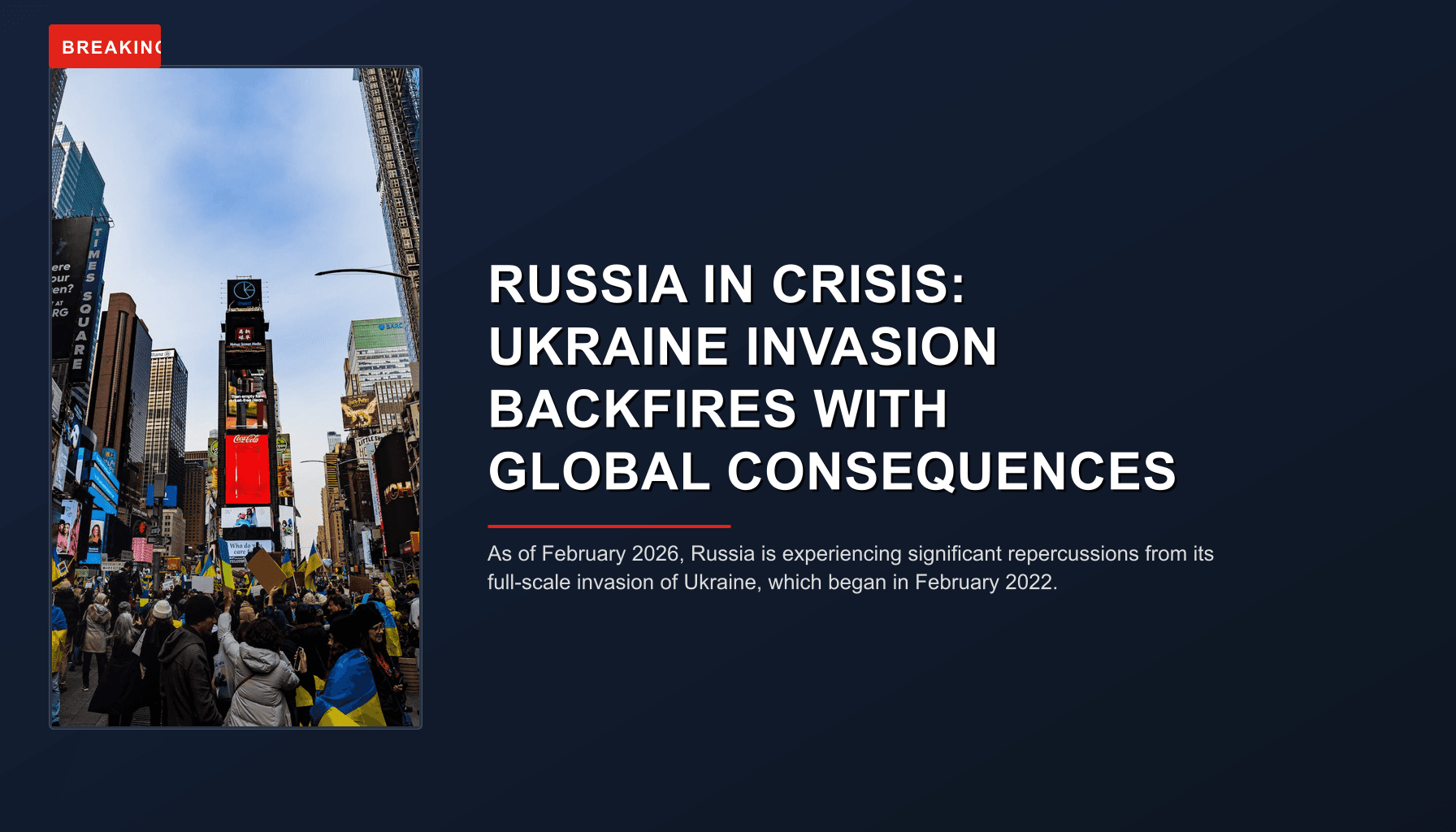
Russia's prolonged conflict in Ukraine continues to have severe repercussions on multiple fronts.
As February 2026 unfolds, Russia finds itself grappling with profound consequences following its full-scale invasion of Ukraine, launched in February 2022. The Kremlin’s persistent narrative of a 'special military operation' necessary for national security has not stemmed the tide of international backlash and domestic turmoil that President Vladimir Putin faces.
Significant military and civilian casualties have been reported, reflecting the brutal nature of the conflict. While exact numbers remain disputed, it is understood that tens of thousands of Russian soldiers have been killed or wounded, highlighting the devastating human cost of the campaign. This grim reality, alongside the displacement of millions of Ukrainians, underscores the humanitarian disaster at hand.
Western nations, spearheaded by the UK and European Union, have maintained robust support for Ukraine. Substantial military aid and humanitarian assistance have been provided, as these countries hold firm in their defence of Ukraine’s sovereignty. The support, however, has further strained relationships with Moscow, perpetuating its international isolation.
In retaliation, economic sanctions have been levied against Russia, crippling various sectors of its economy. Although the specific impacts on individual sectors remain unclear, reports suggest a significant decline in Russia's GDP, alongside a devaluation of the ruble. Such financial pressures compound the struggles of ordinary Russians already coping with restricted access to global markets and goods.
Within Russia itself, the extent of public dissent remains opaque, largely due to the government's stringent control over the media. It is understood that state apparatuses have limited public access to independent reporting, attempting to insulate citizens from the war's full realities. Despite this, whispers of unrest persist, hinting at an undercurrent of discontent.
Recent coverage from journalists like Steve Rosenberg, often targeted by state media, suggests that some Russians are beginning to question the official narrative. As reported in various forums and lectures, Rosenberg advocates for an informed populace, even as he navigates the harsh landscape of media censorship within the Russian Federation.
The Kremlin’s insistence on framing the invasion as essential for security purposes continues to be a point of contention internationally. Critics argue that this strategy is not tenable in the long term, especially amidst growing economic pressures and diplomatic ostracisation. Observers have noted that the sustainability of this position is increasingly under scrutiny.
Related Articles

 Chip Offtheroldblock
Comments (0)
No comments yet. Be the first to share your thoughts!
Leave a Comment
Your email address will not be published. Comments are moderated before appearing.