SHAKY ALLIANCE: UK'S TROUBLED RELATIONSHIP WITH THE US
Keir Starmer's decision to allow US-Israel strikes from UK bases has sparked criticism, highlighting tensions in the transatlantic alliance and raising questions about British foreign policy independence.
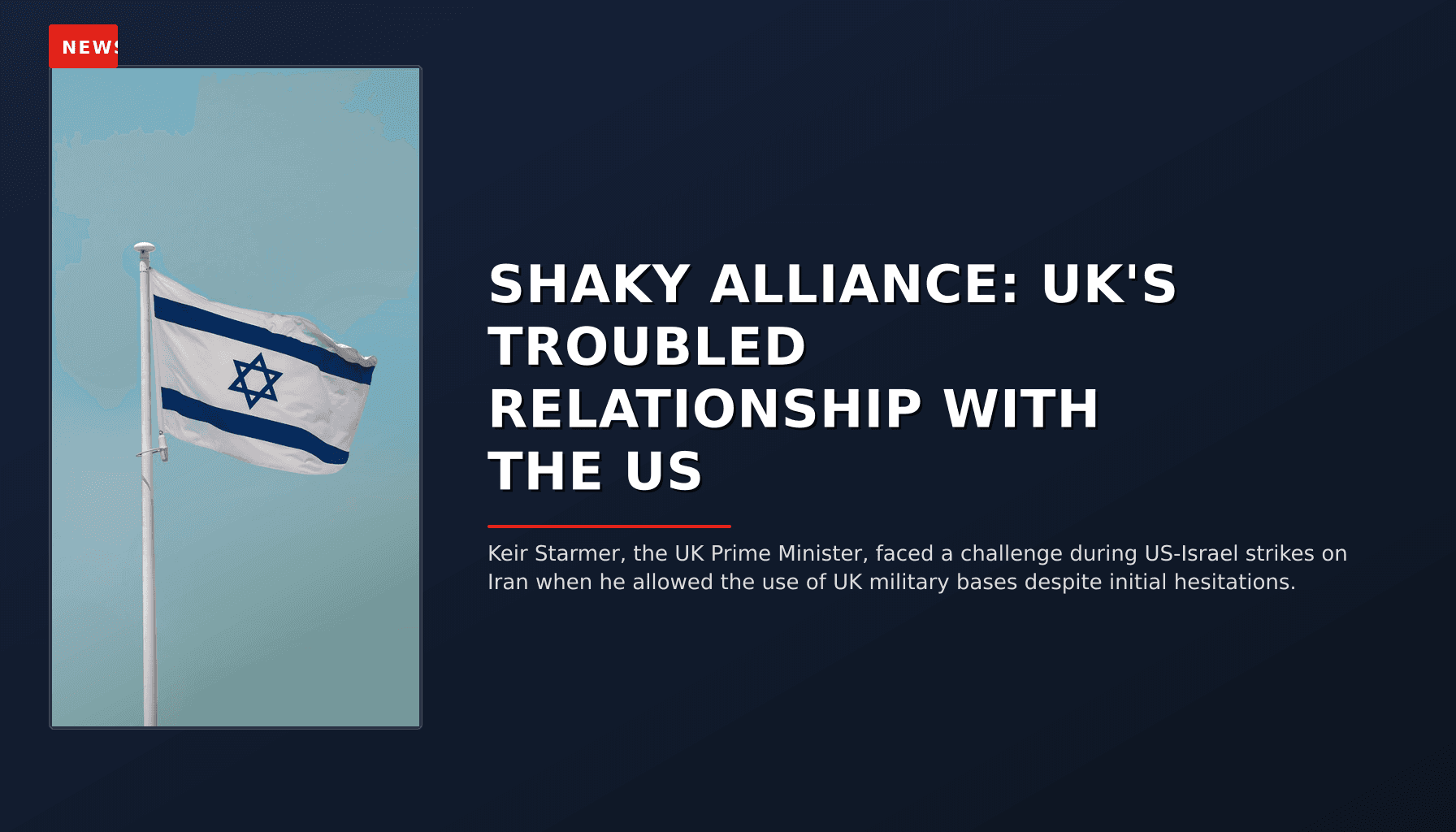
Keir Starmer faces criticism over decision to permit US-Israel strikes from UK bases.
In a recent development that has sparked considerable debate, Prime Minister Keir Starmer of the United Kingdom found himself at the centre of a diplomatic storm following his decision to allow the use of UK military bases for US-Israeli strikes targeting Iran. This move, which initially met with hesitations from Starmer's side, has raised questions about the UK's commitment to its foreign policy principles and its relationship with both the US and Israel.
According to sources close to the Prime Minister, there were internal discussions within the UK government regarding the implications of such a decision. These discussions highlighted concerns over the potential escalation of tensions in the Middle East and the impact on Britain's strategic interests in the region. However, despite these reservations, Starmer ultimately gave his consent, a decision that has not gone unnoticed by analysts and political observers alike.
Rafael Behr, a noted commentator on British politics and international relations, has pointed out that this reliance on the US partnership is particularly significant post-Brexit. In an interview with The Guardian, Behr emphasized how deeply integrated UK defence and security systems are with those of the United States. 'This entanglement leaves Britain exposed,' he remarked, highlighting the vulnerabilities inherent in such a close relationship.
Behr's comments come at a time when the UK is seeking to redefine its global role following its departure from the European Union. The reliance on the US not only underscores the challenges of navigating a new international landscape but also raises concerns about the independence of British foreign policy decisions. As one political analyst put it, 'The more entwined our systems are with the Pentagon's, the more susceptible we become to external pressures.'
Amidst these tensions, former President Donald Trump's recent remarks have added fuel to the fire. During an interview, Trump noted that 'the relationship is obviously not what it was,' a sentiment that reflects the broader strains in the transatlantic alliance. This acknowledgment from such a key figure in US politics further underscores the complexities and challenges faced by Starmer as he seeks to navigate Britain's diplomatic relationships.
Starmer has repeatedly stated that the UK does not support 'regime change from the skies,' a principle that was supposedly upheld in this instance. However, critics argue that permitting the use of British bases for such strikes sends conflicting signals about the UK's commitment to peace and diplomacy in the region. This decision has been particularly criticised by those advocating for a more independent foreign policy not entirely aligned with US interests.
Related Articles
 Bea Rightback
Comments (0)
No comments yet. Be the first to share your thoughts!
Leave a Comment
Your email address will not be published. Comments are moderated before appearing.