
SUPREME COURT REJECTS TRUMP TARIFFS: NEW PLAN ANNOUNCED
The U.S. Supreme Court ruling against Trump's tariffs under the IEEPA shifts power back to Congress, leading to a new round of political and economic uncertainty.
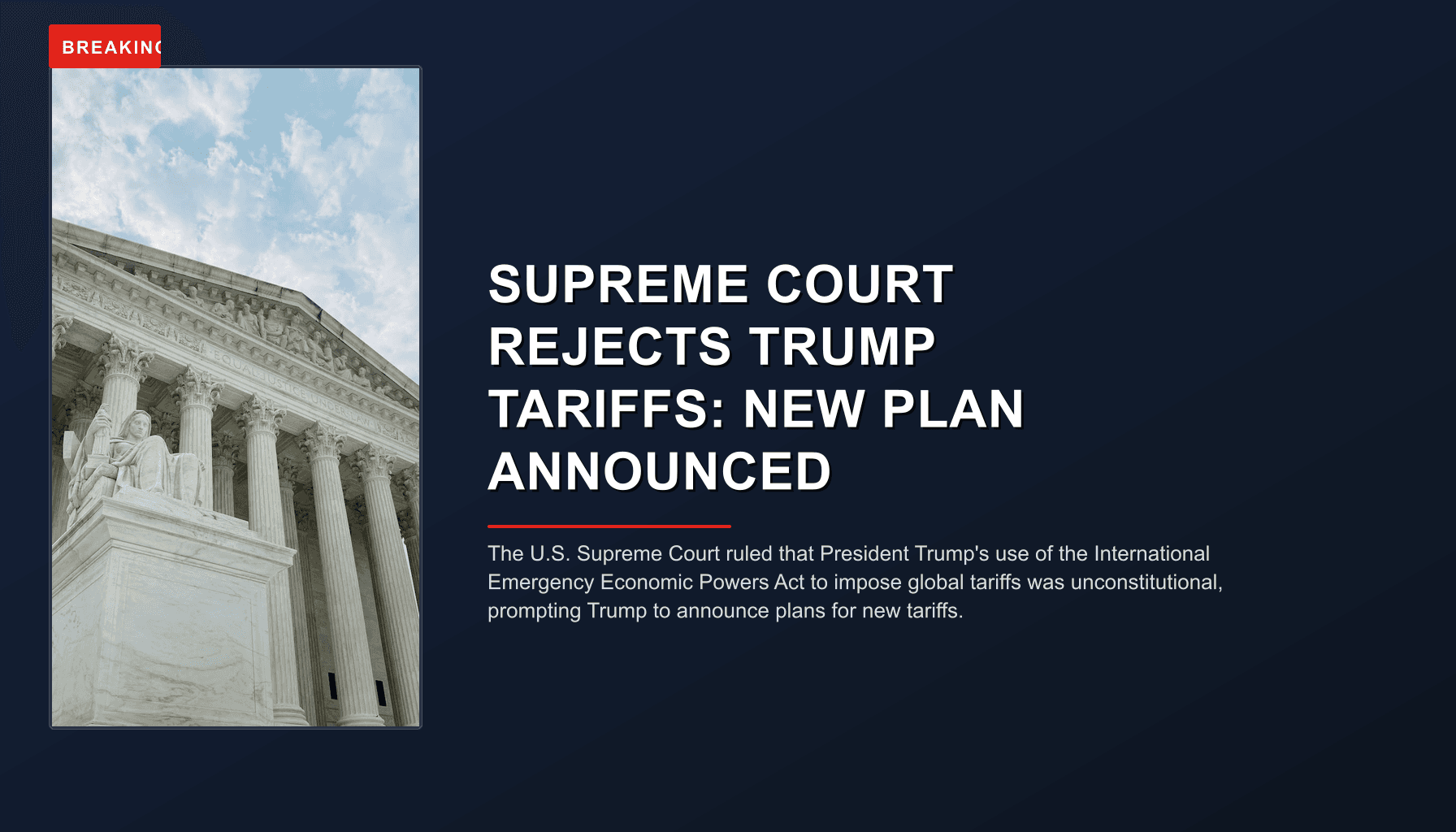
A landmark ruling sees Trump's tariffs under fire, prompting swift presidential response.
The U.S. Supreme Court has delivered a significant blow to former President Donald Trump’s economic policies, ruling 6-3 that his use of the International Emergency Economic Powers Act (IEEPA) to impose global tariffs was unconstitutional. This decision was made public earlier this week, raising substantial questions about presidential power over trade matters.
The ruling underscores the court's position that the authority to levy taxes, including tariffs, resides squarely with Congress, a stance that challenges Trump’s previous manoeuvres. As detailed by The Guardian, the justices have essentially struck down the tariffs implemented in preceding years, asserting the legislative branch's primacy in financial affairs.
In a swift counter-move, Trump announced his intent to introduce a new 10% global tariff under the auspices of Section 122 of the Trade Act of 1974. This statute provides the president with certain powers to adjust imports, but analysts swiftly noted the renewed potential for legal challenges.
The decision has sparked a robust political response. Senate Democrats, seizing on the moment, have already proposed legislation aimed at refunding approximately $175 billion collected from Trump’s original tariffs. This proposal, according to AP News, reflects intense scrutiny of the former president’s fiscal impacts.
As expected, financial markets exhibited cautious reactions to the unfolding events. Investors are navigating uncertainties prompted by the potential for elevated tariffs, a caution echoed by several market analysts who see challenges looming for international trade dynamics.
Notably absent from the narrative, as discussed across various reports, is a clear pathway for Trump's new tariff strategy. While claims that tariffs might increase from 10% to 15% have surfaced, these remain unconfirmed, contributing to a cloud of economic unpredictability.
The court's decision to repudiate Trump's use of the IEEPA is historic, signifying a nuanced judicial interpretation of executive power limitations, something that has been debated extensively in legal circles. This case might set precedent similar to past rulings that recalibrated the balance of governmental branches.
China and South Korea, countries significantly impacted by the prior tariffs, have yet to formally respond to Trump's proposed adjustments. However, trade experts are watchful, given the potential for international retaliatory measures which could deepen global economic fissures.
Related Articles

 Drew P. Facts
Comments (0)
No comments yet. Be the first to share your thoughts!
Leave a Comment
Your email address will not be published. Comments are moderated before appearing.