
YOSEMITE FIREFALL: NATURE'S BRIEF WINTER SPECTACLE
Each February, Yosemite’s Horsetail Fall dazzles as a molten orange Firefall, captivating visitors with its brief yet unforgettable winter spectacle.
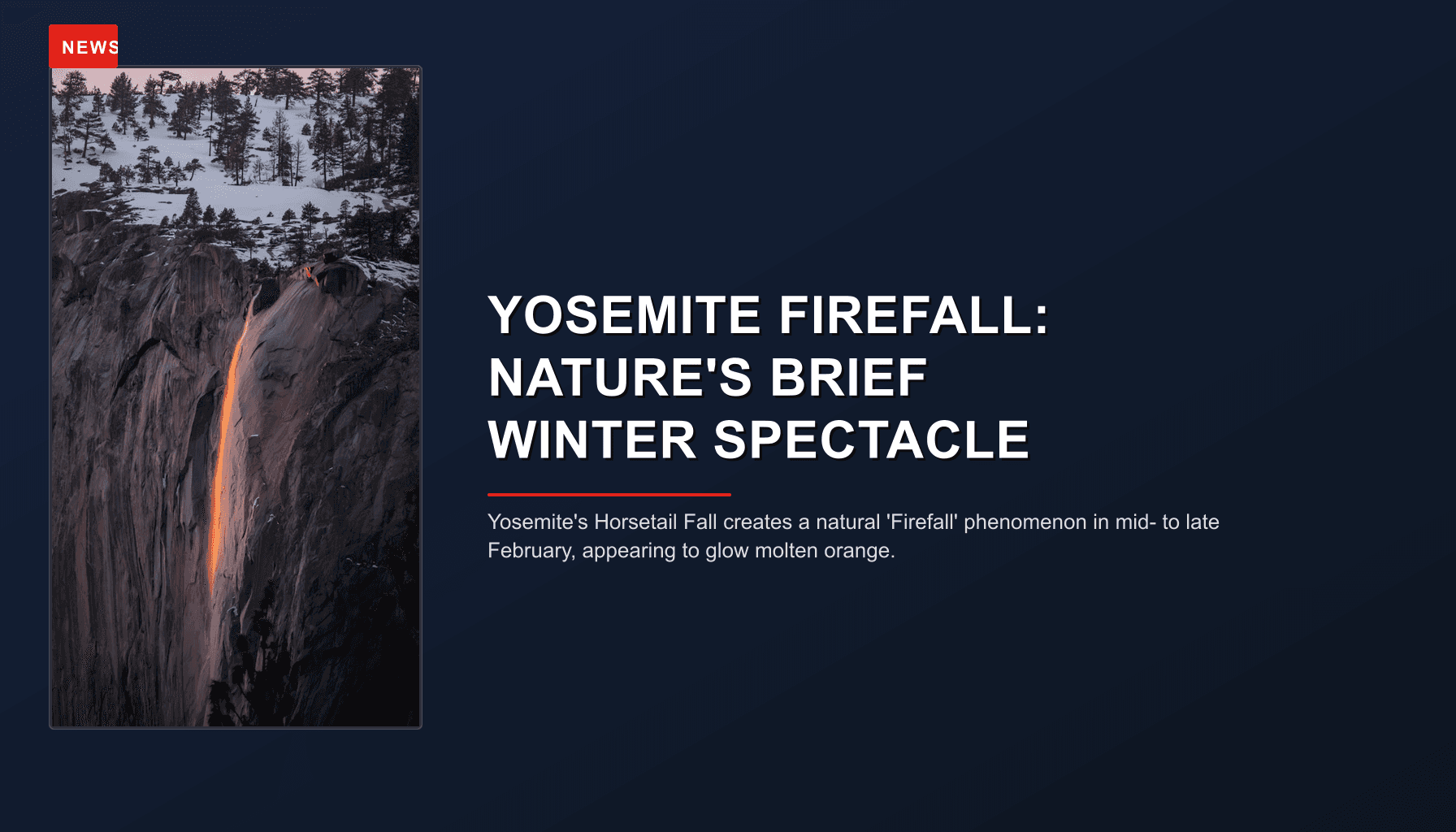
In February, Yosemite's Horsetail Fall transforms into a fiery cascade, capturing imaginations.
Every year in mid- to late February, a dazzling display unfolds at Yosemite National Park, as the setting sun transforms Horsetail Fall into a fiery cascade of light. This natural phenomenon, known as the Firefall, occurs on the eastern edge of El Capitan, drawing visitors from around the world.
The Firefall lasts for a mere 10 minutes, with its peak intensity emerging 10-15 minutes before sunset. During this fleeting moment, the waterfall glows a molten orange, reminiscent of flowing lava. This captivating sight is contingent upon specific conditions—primarily clear skies and adequate water flow—a fact well-documented by the National Park Service.
Though anticipated each year, the Firefall's appearance is not guaranteed. Environmental factors play a crucial role, as insufficient late winter rainfall or snowmelt can greatly diminish the spectacle. Such variability only heightens the allure for those fortunate enough to witness it.
The El Capitan Picnic Area on Northside Drive is touted as the prime vantage point for this annual wonder. Enthusiasts and photographers alike gather at this location, patiently awaiting the brief yet mesmerising transformation.
Historically, the Firefall was not always a natural occurrence. Prior to its preservation as a national park, Yosemite hosted a man-made Firefall in the 20th century, where glowing embers were dropped from Glacier Point. This practice ceased in 1968 to maintain the park's natural integrity.
Today, the natural Firefall has become a celebrated hallmark of Yosemite, marking the end of winter and heralding the approach of spring. It serves as a subtle reminder of the delicate balance within natural ecosystems.
In recent years, the increased popularity of the Horsetail Fall Firefall has prompted the National Park Service to implement measures to mitigate the environmental impact and preserve the visitor experience. This includes managing traffic and limiting the number of visitors during the peak viewing window.
Park officials continue to emphasise the importance of planning and preparation for those eager to witness the Firefall. Visitors are advised to arrive early, respect designated viewing areas, and prepare for variable weather conditions that might affect visibility.
As climate patterns evolve, the predictability of the Firefall remains uncertain. Yet, its occurrence continues to attract dedicated nature lovers, photographers, and casual visitors alike, each hoping to capture the ephemeral magic of this natural wonder.
Related Articles


 Chip Offtheroldblock
Comments (0)
No comments yet. Be the first to share your thoughts!
Leave a Comment
Your email address will not be published. Comments are moderated before appearing.