CPS U-turns on ‘Blasphemy’ Charge in Quran Burning Case
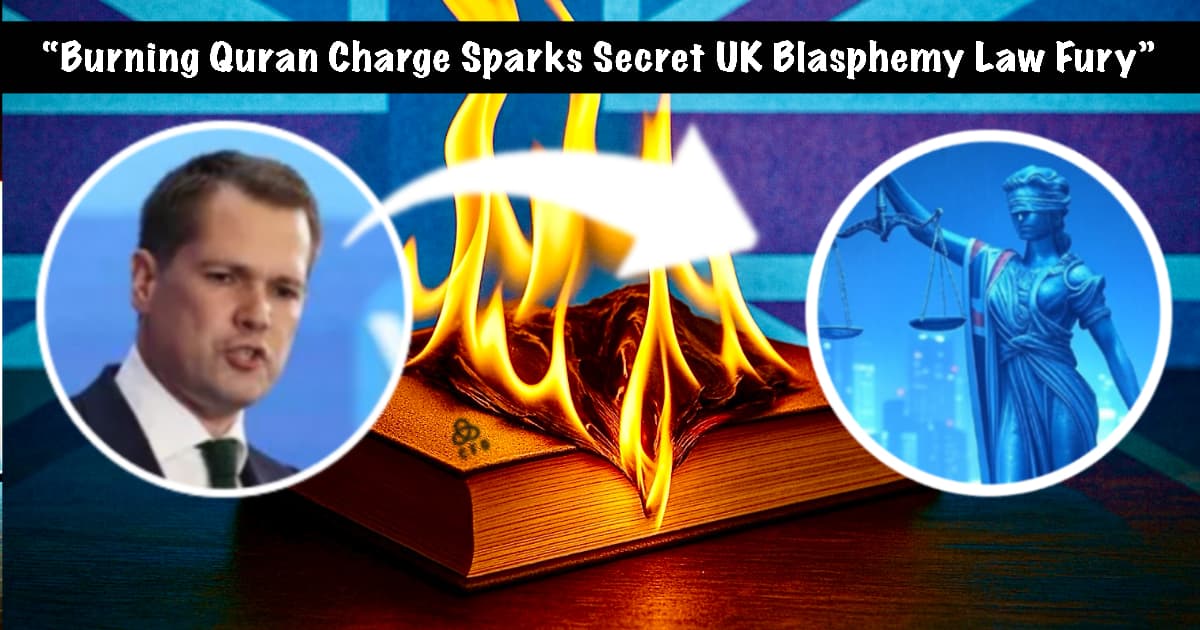
Quran-burning suspect’s charge rewritten after backlash over ‘secret blasphemy law’—CPS retreats amid uproar, legal doubts, and political pressure.
A 50-year-old man who allegedly set fire to a copy of the Quran outside the Turkish Consulate in West London has had a key charge amended by the CPS )Crown Prosecution Service), following widespread legali scrutiny and formal objections raised by senior political and civil figures.
Hamit Coskun, of Derby, was originally charged in February with racially aggravated harassment, with the charge curiously directed at the institution of Islam itself, rather than any individual or group of people. That charge, rare in both construction and precedent, prompted immediate concern from multiple legal commentators, (including myself) campaign groups and Members of Parliament, who warned it bore the hallmarks of a reintroduction of the UK's long-defunct blasphemy laws.
Two days after the alleged incident, in which Mr Coskun was said to have ignited a Quran while shouting anti-Islamic abuse, the CPS announced the charge, framed specifically as harassment of the religious institution of Islam. However, the charge quickly came under fire. The National Secular Society publicly questioned the legality of prosecuting an act that targeted no individual or definable group, while shadow Secretary of State for Justice Robert Jenrick wrote to the Director of Public Prosecutions warning that such a legal position was unsustainable and legally questionable under existing statute.
Under English law, there is no recognised legal category for the harassment of a religion itself or a non-human institution. The relevant legislation—primarily section 5 of the Public Order Act 1986, as amended by the Crime and Disorder Act 1998—criminalises threatening, abusive, or insulting words or behaviour that are likely to cause harassment, alarm or distress to a person. When aggravated by religious or racial hostility under section 31, the offence becomes indictable.
But crucially, the victim must be a person or persons capable of perceiving or being impacted by the conduct in question. Institutions, belief systems, or abstract entities—such as the concept of "Islam"—cannot, in law, suffer harassment. This renders the original CPS charge not just legally fragile but non-justiciable: it had no identifiable legal locus or victim.
In 2008, the UK Parliament formally abolished the centuries-old common law offences of blasphemy and blasphemous libel via section 79 of the Criminal Justice and Immigration Act. This statutory repeal was a clear legislative signal that the criminal justice system would no longer entertain prosecutions based on the offence of religious insult per se. The law instead shifted focus toward protecting individuals and communities from harm or hostility, rather than shielding ideas or institutions from criticism, however offensive.
Related Articles

Comments (0)
No comments yet. Be the first to share your thoughts!
Leave a Comment
Your email address will not be published. Comments are moderated before appearing.