
DIGITAL ARTFORMS: UK PUBLIC ART REACHES DIGITAL MILESTONE
A nationwide digitisation effort in the UK has successfully catalogued one million public artworks, supported by a £2.8 million Heritage Fund grant.
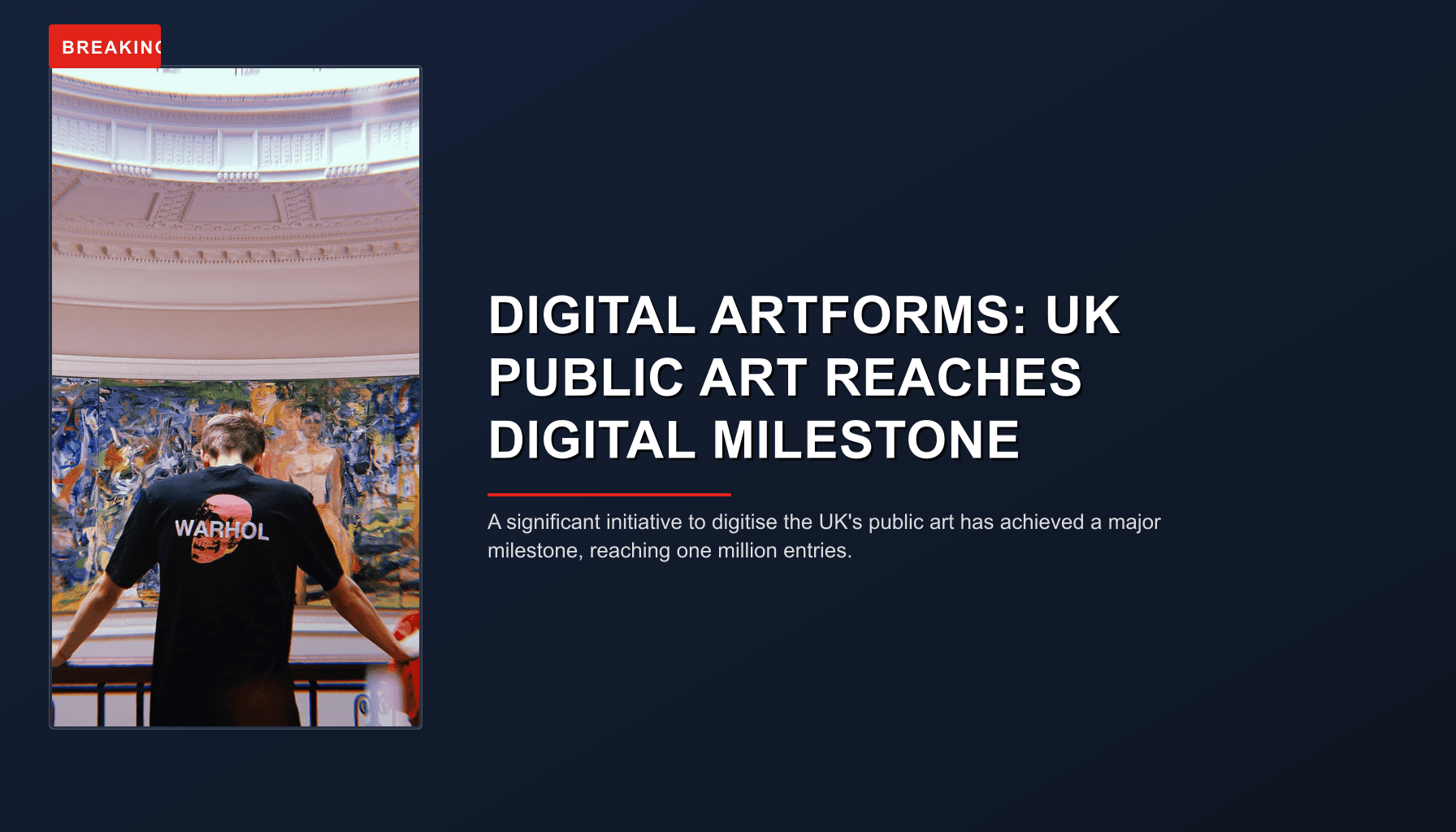
A groundbreaking project has digitised one million pieces of public art across the UK.
In a landmark achievement for cultural preservation, the UK's public art digitisation initiative has reached a remarkable milestone, with one million entries now catalogued. This ambitious undertaking has been supported by a substantial £2.8 million grant from the Heritage Fund, according to official reports.
The project aims to make art widely accessible, featuring works from various institutions across the UK. Led by Art UK, the programme has managed to photograph and digitise over 36,000 sculptures located both in public spaces and within private collections, creating a comprehensive digital archive that spans centuries of artistic endeavour.
According to Art UK, the task of digitising such vast collections is a collaborative effort that has involved nearly 2,000 volunteers. These dedicated individuals have played a crucial role in transforming the Conway Library photographic collection at The Courtauld Institute of Art, a project that unfolded over more than five years and is seen as a beacon of volunteer-driven success.
Technological innovation has been at the project’s core, with artificial intelligence integrated to expedite the cataloguing process. This development underscores the pivotal role that AI is playing in modernising the archival practices, reflecting a trend seen in other domains such as the Natural History Museum’s digital efforts.
The participation of various institutions underscores the project's expansive reach and ambition. The collaborative nature has enriched the cultural landscape, fostering enhanced connectivity between art aficionados, historians, and the general public.
Despite the project's successes, certain details remain elusive, such as the precise number of volunteers engaged or the exact duration of the entire initiative. Nonetheless, the project leaders are optimistic, highlighting the transparency and accessibility of public art now available to a broader audience.
The initiative's significance lies not only in its scale but also in its potential to democratise access to culture. By digitally preserving the nation's artistic heritage, the project provides a valuable resource for education and tourism, offering virtual access to works that were previously limited by geography.
Leading figures in the art world have praised the endeavour, with Tom Bilson of The Courtauld Institute of Art emphasising the educational value it provides. Similarly, Helen Hardy has recognised the project's ability to inspire future generations of artists and historians.
Related Articles


 Drew P. Facts
Comments (0)
No comments yet. Be the first to share your thoughts!
Leave a Comment
Your email address will not be published. Comments are moderated before appearing.