
We Clarify: Supreme Court Says Woman Means Biological Female!
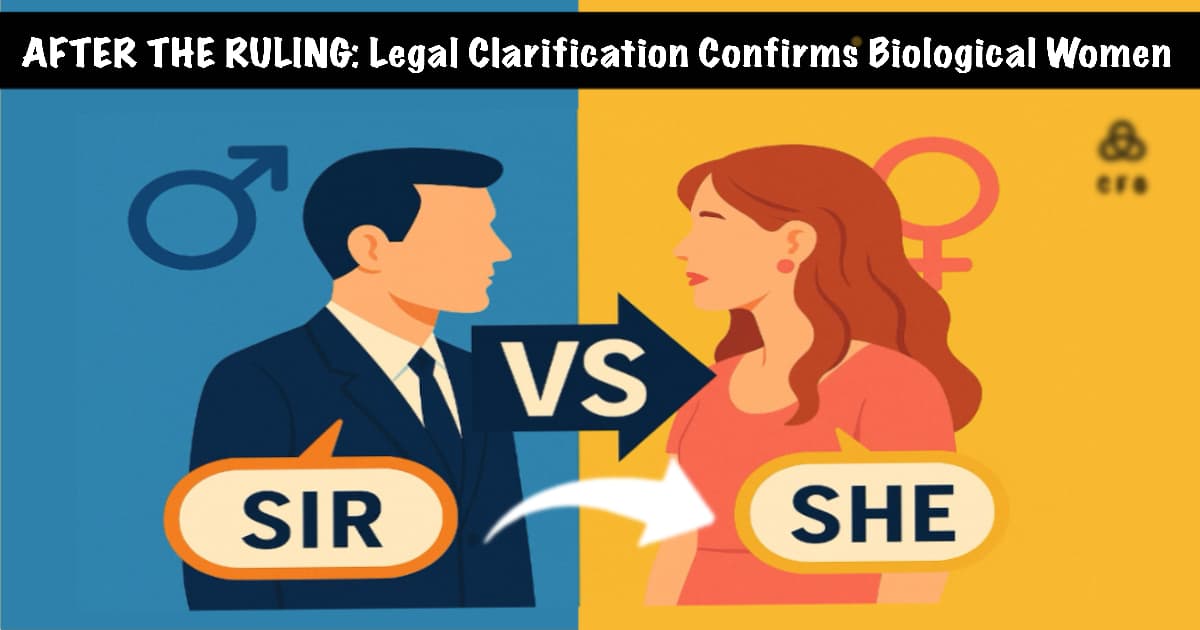
Supreme Court ruling sparks national confusion — we cut through the noise to reveal what the judgment really means for gender, legality, and identity in UK law.
In light of the recent UK Supreme Court Ruling on the legal definition of what a woman is in the eyes of UK law, we have had many readers contact us, saying that after reading it, they were troubled by the fact that, in the legal wording, it still appeared to hint at the possibility that a man who has undergone gender reassignment surgery would still qualify as a legal woman under this ruling.
So in this article, I am going to break it down and disambiguate the confusing legal language for our readers, and point out why this particular wording is causing so much unnecessary legal confusion in the first place.
To start with, what this ruling did not do is change the biological framework upon which the concept of sex is built in law. The judgment reaffirmed that sex is binary—male and female—and this is based on biological reality, not self-perception, identity, or post-operative anatomical reconstruction. The ruling was delivered in response to the long-running legal tensions surrounding how the Equality Act 2010 interacts with the Gender Recognition Act 2004, particularly in single-sex spaces and services.
At the heart of the issue is a clause within the Gender Recognition Act which allows those who have been issued with a Gender Recognition Certificate (GRC) to be treated for most legal purposes as the opposite sex. However, this is where the confusion has crept in—many have misread this as granting a blanket legal reclassification of sex in all contexts. It does not.
The Supreme Court clarified—with forensic legal precision—that a person may be treated as the opposite sex for the purposes of administrative law in specific contexts (such as marriage or pensions), but that this does not erase or override their biological sex when sex-specific laws or protections are at play. This includes laws governing single-sex spaces, services, sports, or provisions intended to protect women on the basis of biological sex.
Indeed, the court made clear that biological sex remains the legally determinative factor
Related Articles

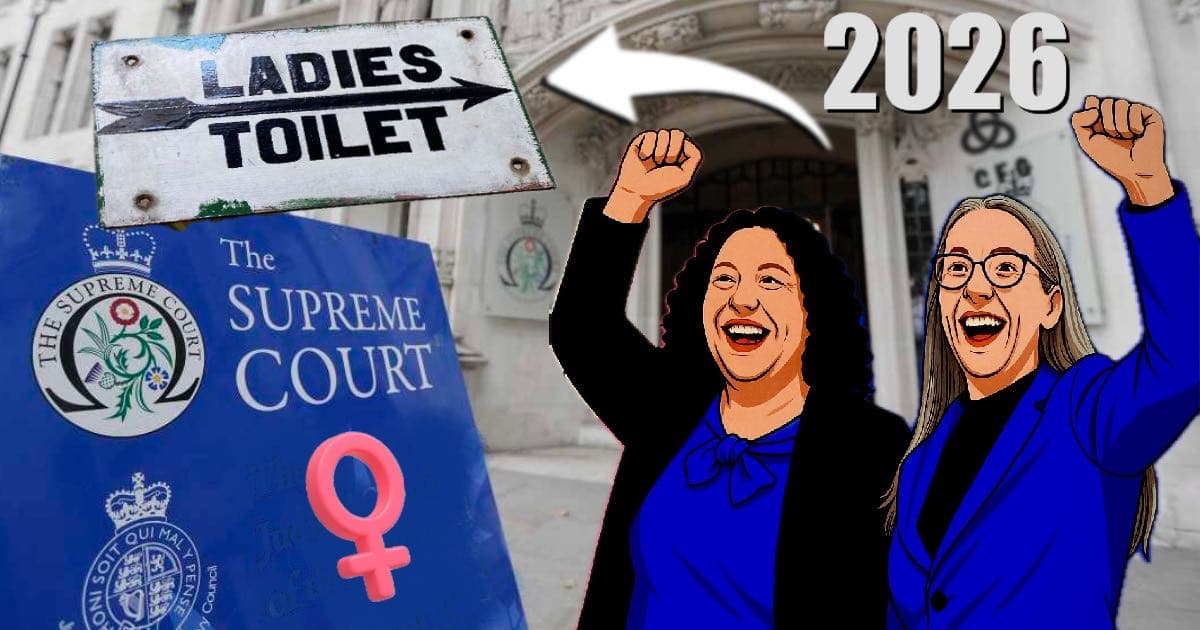
Comments (0)
No comments yet. Be the first to share your thoughts!
Leave a Comment
Your email address will not be published. Comments are moderated before appearing.